In today’s digital-first world, patients no longer rely only on referrals or word of mouth. They search online—often on Google—before choosing a doctor, clinic, or hospital. This is where healthcare SEO becomes a powerful growth lever. When done right, it helps medical brands appear exactly when patients are actively looking for care.
This guide explains healthcare SEO in simple terms and shows how healthcare marketing, SEO for medical websites, and digital medical marketing work together to drive visibility, trust, and patient acquisition.
What Is Healthcare SEO?
Healthcare SEO is the process of optimizing medical websites so they rank higher on search engines for relevant patient queries. These may include symptoms, treatments, services, or healthcare providers near them.
Unlike generic SEO, SEO for medical websites requires a stronger focus on credibility, accuracy, user experience, and compliance. Google evaluates healthcare content carefully because it falls under “Your Money or Your Life” (YMYL) topics, where trust and expertise matter deeply.
Why SEO Matters in Healthcare Marketing
Patients today are informed and proactive. Before booking an appointment, they often:
- Search symptoms on Google
- Compare clinics and hospitals
- Read reviews and medical content
- Check credentials and expertise
Strong healthcare marketing ensures your brand is visible at every step of this journey. SEO plays a critical role by driving consistent, high-intent traffic without relying entirely on paid ads.
When combined with digital medical marketing efforts like content marketing, local optimization, and reputation management, SEO becomes a long-term growth engine.
Core Elements of an Effective Healthcare SEO Strategy
Keyword & Search Intent Research
Understanding how patients search is the foundation. Keywords may include:
- Service-based searches (e.g., dental implants, cardiology clinic)
- Informational queries (symptoms, treatment options)
- Local searches (clinic near me, hospital in city)
Aligning content with real patient intent ensures better engagement and higher conversions.
High-Quality Medical Content
Content is central to SEO for medical websites. Blogs, service pages, FAQs, and educational resources should:
- Be accurate and evidence-based
- Use simple, patient-friendly language
- Answer common questions clearly
- Include expert insights and references
This approach builds authority while improving rankings and trust.
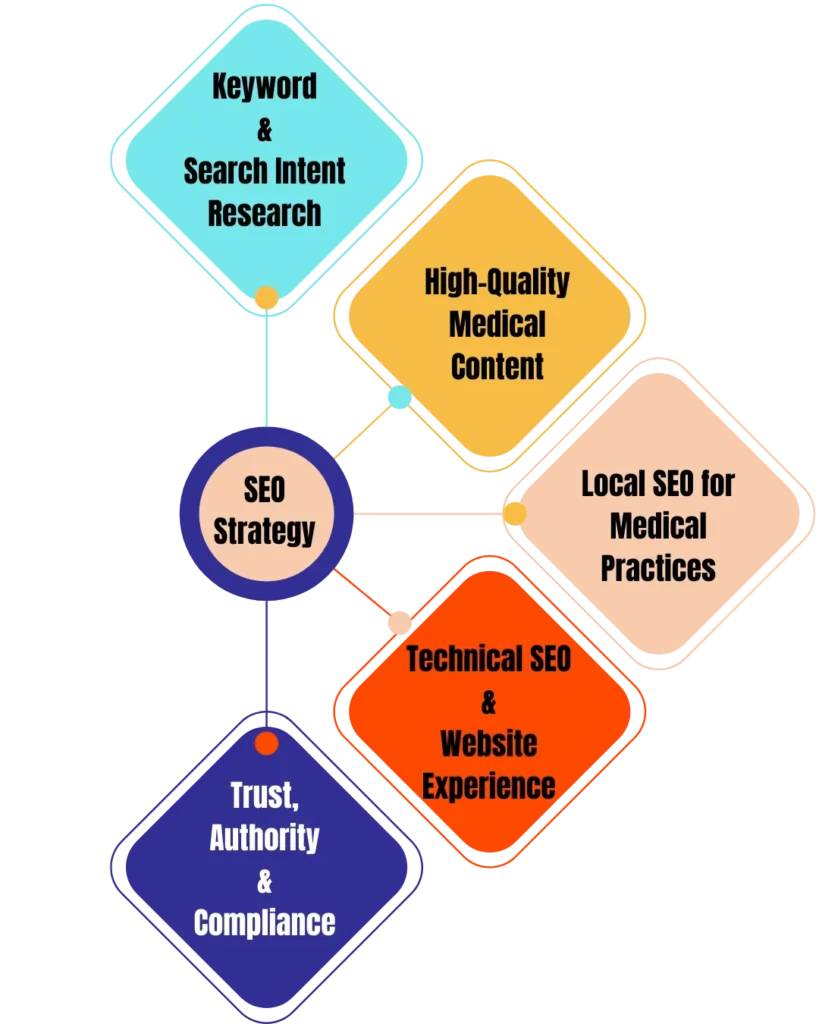
Local SEO for Medical Practices
Most patients search locally. Optimizing for local visibility includes:
- Google Business Profile optimization
- Consistent name, address, and phone details
- Location-specific service pages
- Patient reviews and ratings
Local SEO significantly improves appointment bookings for clinics and hospitals.
Technical SEO & Website Experience
A slow or confusing website can hurt both rankings and patient trust. Technical optimization includes:
- Fast loading speeds
- Mobile-friendly design
- Secure HTTPS setup
- Clear navigation and internal linking
These factors support both SEO performance and user experience.
Trust, Authority & Compliance
Healthcare SEO must emphasize credibility. This includes:
- Author bios with medical credentials
- Clear disclaimers and privacy policies
- Accurate, updated information
- Secure handling of patient data
Search engines and patients alike reward transparency and trustworthiness.
How Digital Medical Marketing Supports SEO
SEO works best when combined with broader digital medical marketing strategies such as:
- Content distribution through social media
- Online reputation management
- Educational campaigns and email marketing
- Analytics-driven optimization
Together, these channels reinforce visibility, authority, and patient engagement across the digital ecosystem.
Common SEO Mistakes in Healthcare
Many medical brands struggle with SEO due to:
- Thin or generic content
- Overuse of medical jargon
- Ignoring local search optimization
- Outdated website structures
- Focusing only on paid ads
Avoiding these mistakes allows SEO to deliver sustainable, long-term results.
Why Partner with a Specialized SEO Agency?
Healthcare SEO requires both marketing expertise and an understanding of medical compliance. Partnering with a skilled digital agency ensures:
- Ethical and compliant SEO practices
- Data-driven growth strategies
- Better ROI compared to short-term advertising
- Consistent patient acquisition over time
Final Thoughts
Healthcare SEO is no longer optional—it’s essential. With the right combination of healthcare marketing, SEO for medical websites, and digital medical marketing strategies, medical brands can attract more patients, build trust, and grow sustainably.
If you’re looking to improve your online visibility and patient acquisition, Digiactus can help you implement a results-driven healthcare SEO strategy tailored to your goals.
👉 Get in touch with Digiactus today for a free healthcare SEO audit and growth roadmap.